Spell slots are the scarcest resource in any D&D session. A wizard at full capacity and a wizard who burned their last slot to end a fight two encounters ago are mechanically very different characters, yet at a busy table that distinction is easy to lose track of. A dedicated tracker prevents that.
Warlock pact magic vs standard spell slots
Warlocks work on a completely different system from every other spellcasting class. Where a wizard or cleric has tiered spell slots that recover on a long rest, a warlock has a small pool of pact magic slots (all at the same level) that recover on a short rest. At level 5, a warlock has exactly two 3rd-level slots. They can cast twice, take a ten-minute rest, and cast twice again. Over a long adventuring day, this adds up to far more total casts than the slot count implies.
This asymmetry is intentional and reflects the warlock's relationship with their patron. Tracking it accurately matters because the short rest recovery changes how you pace encounters. A warlock player who knows their slots come back on a short rest will advocate for rest breaks differently than one who thinks they are locked out until tonight.
Tracking multiple spellcasters at the table
If you run a party with three or four spellcasters, the tracking problem multiplies. The tracker is intentionally single-character: one class, one level, one pool of slots. Each player runs their own instance. This keeps each player responsible for their own resource management rather than offloading it to the DM.
For the DM side, tracking NPC spellcasters is simpler. Spellcasting NPCs typically have a fixed spell list per encounter rather than a full class progression. The tracker is most useful here when you have a recurring NPC spellcaster, such as a BBEG who appears in multiple sessions, and you want to carry their depleted slots across scenes.
Using spell cards with a slot tracker
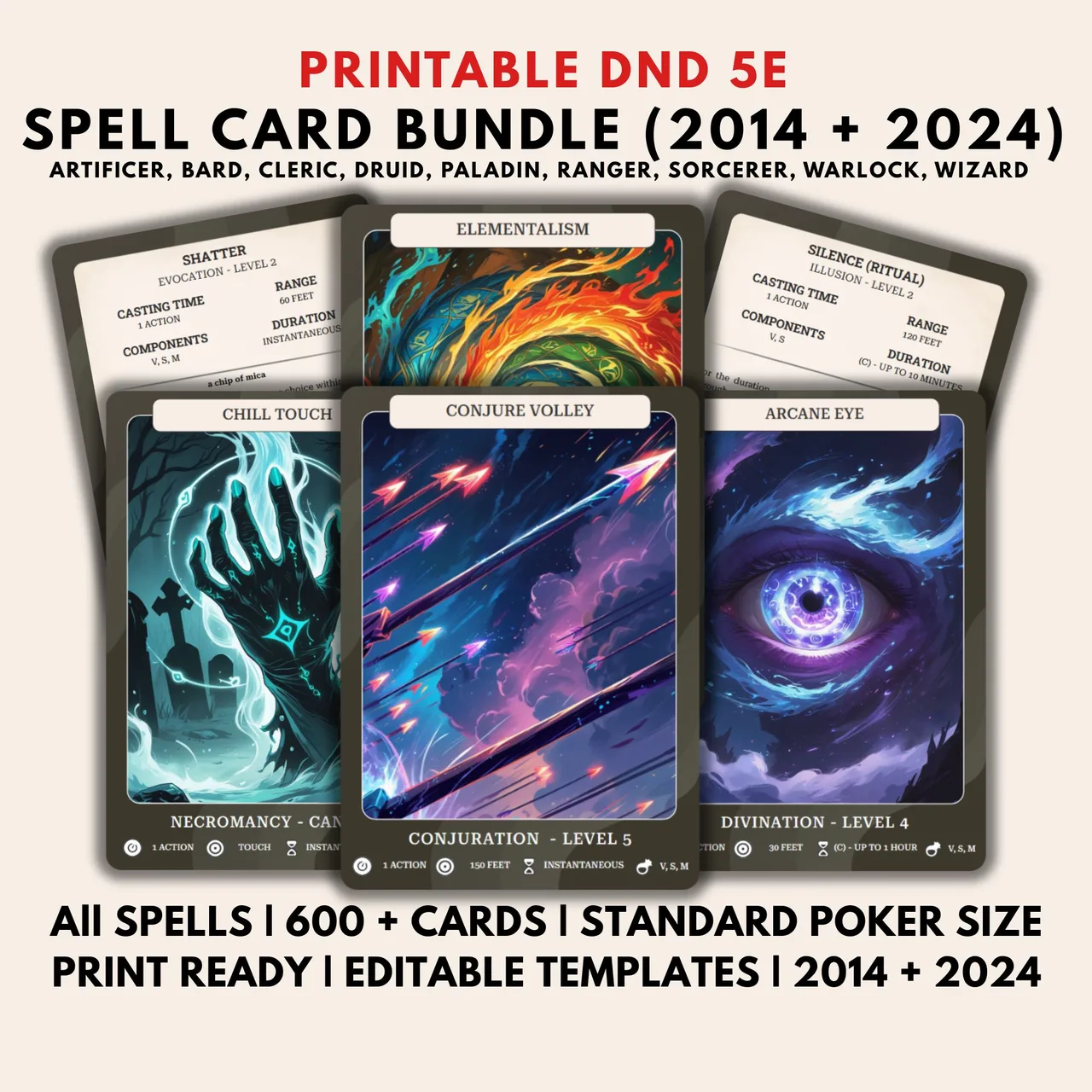
The tracker tells you how many slots you have. Spell cards tell you what to spend them on. Together they make a complete reference: the card describes the spell, the tracker shows whether you have the right level slot available. Physical spell cards from MakeMythic pair well because you can lay them on the table next to the tracker, flip spent ones face-down, and keep your play area organised without opening a PDF or flipping through a book.
Half-casters: Paladin and Ranger
Paladins and Rangers are half-casters, meaning they gain spell slots at half the rate of a full-caster like a wizard or cleric. They get no spell slots at level 1 and begin casting at level 2. Their slot progression tops out at 5th-level spells at character level 17, compared to a wizard's 9th-level spells at character level 17. This matters for encounter design: a Paladin at level 5 has access to 1st and 2nd-level slots only, while a Cleric of the same level already casts 3rd-level spells.
The half-caster offset also affects multi-classing calculations. When combining a Paladin with a Wizard, you add half the Paladin levels (rounded down) to the full Wizard levels to determine your effective caster level for the multi-class spell slot table. This tracker handles single-class characters; for multi-class spell slots you will need the PHB table or a dedicated multi-class tool.
Managing spell slots across a long adventuring day
The DMG recommends six to eight medium-to-hard encounters per long rest as the baseline for balanced resource drain. In practice, most tables run fewer encounters between long rests, which means spellcasters frequently arrive at major fights with full or near-full slot pools. This tends to make the game feel easy and reduces the strategic value of resource management.
One way to create meaningful slot decisions without increasing raw encounter count is to introduce time pressure. If the party must assault the fortress before dawn, they cannot short rest between every encounter. If the dungeon has a wandering monster table and noise attracts attention, burning a fireball has costs beyond the slot. The tracker becomes more valuable when slots genuinely matter, which means that as a DM, your job is to create conditions where burning a 5th-level slot today means you do not have it tomorrow.
Using this tracker on a shared screen during a session, with players running their own copies in separate browser tabs, makes slot state visible to everyone at the table. Transparency about remaining resources often produces better tactical decisions and more interesting player choices than keeping each character's slots opaque.
Sorcery points, ritual casting, and other slot sinks
Not every spell a caster fires comes out of the standard slot grid. Sorcerers convert sorcery points into slots and back again with Flexible Casting, so their effective pool shifts mid-combat. Wizards and clerics cast many utility spells as rituals without spending a slot at all, which quietly extends the day for anyone who plans ahead. Warlocks lean on at-will Eldritch Blast precisely so their two pact slots stay free for the moment that matters. A slot tracker only shows the standard grid, so it pays to note these side channels next to it: a sorcerer holding four sorcery points has more flexibility than the circles suggest, and a party that rituals its Detect Magic and Comprehend Languages is conserving slots you might otherwise expect to see spent.